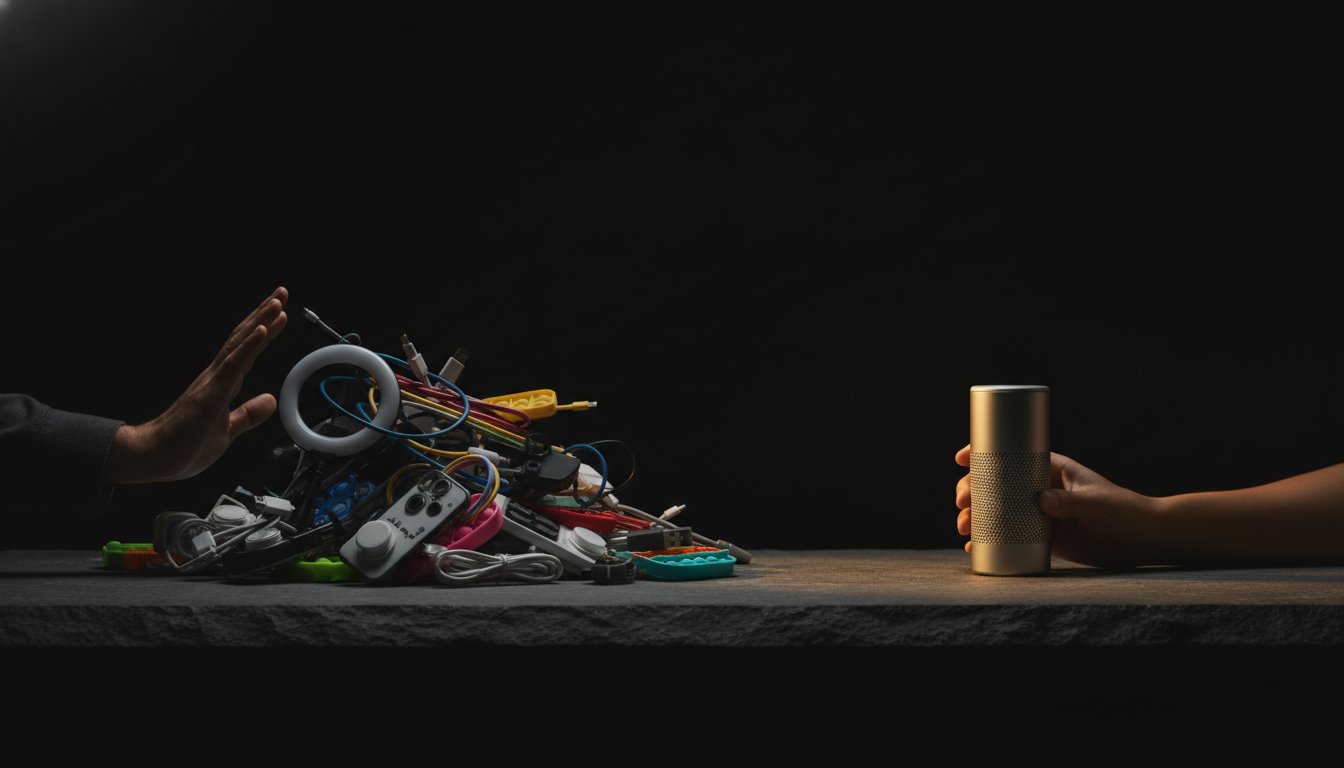
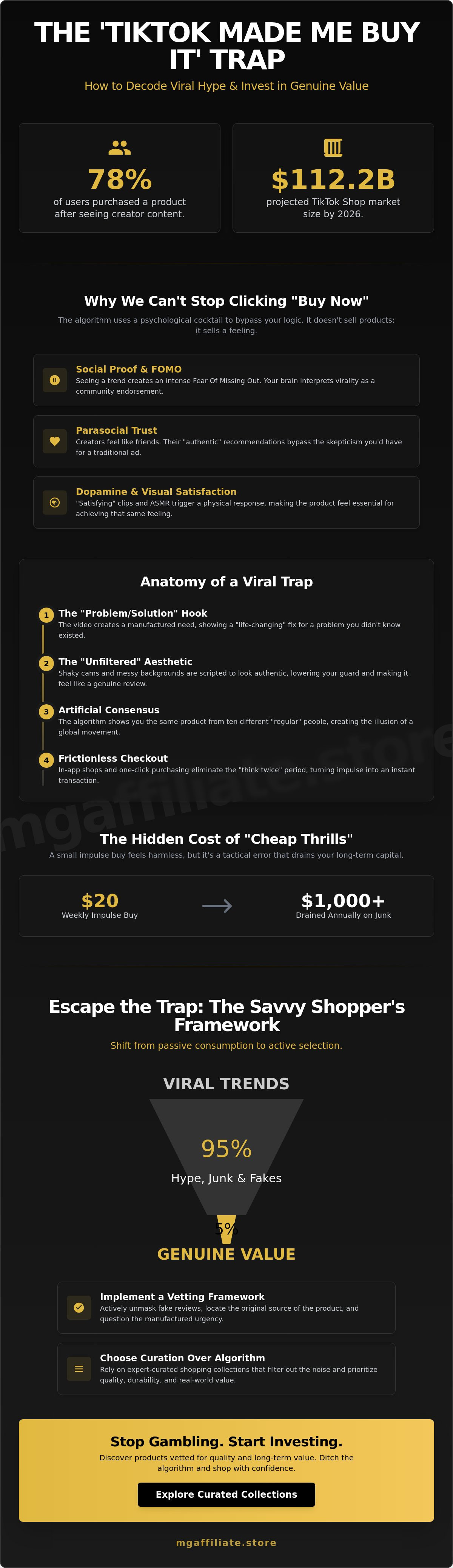
78% of the 1.7 billion people scrolling TikTok have handed over their cash because a creator told them to. It's the ultimate tiktok made me buy it trap. With TikTok Shop projected to hit $112.2 billion in GMV in 2026, the pressure to click "buy" is relentless. You're likely tired of the cycle. You see a 15-second clip. You feel the rush of adrenaline. You click. Then, you end up with a piece of plastic that breaks before the week is out. It's a tactical error that drains your bank account and litters your home with junk.
I know the frustration of opening a package only to realize you've been played by a clever algorithm. You deserve better than late-night buyer's remorse. This article is your reality check. I'm going to teach you how to separate the life-changing gear from the landfill-bound garbage. We will examine the strategy behind identifying high-quality viral finds and provide a curated list of products that actually work. Stop gambling your money on hype. Start investing in value.
Key Takeaways
- Decode the psychological triggers and FOMO tactics that dominate the 2026 social commerce landscape.
- Identify the three critical lies the algorithm tells you about product quality to avoid the tiktok made me buy it trap.
- Implement a high-speed vetting framework to unmask fake AI reviews and locate the original source of any viral gadget.
- Shift from passive consumption to active selection by leveraging curated shopping collections over algorithmic suggestions.
- Learn why rejecting 95% of viral trends is the secret to finding the 5% of products that offer genuine, long-term value.
The Viral Trap: Why We Can’t Stop Clicking 'Buy Now'
The algorithm doesn't care about your financial health. It cares about your attention. By 2026, TikTok has mastered the art of the impulse buy, leveraging a psychological cocktail of social proof and intense FOMO. When you see a product trending, your brain doesn't see an advertisement. It sees a community-vetted solution. Research shows that 78% of users have purchased a product after watching creator content about it. This isn't a coincidence. It's a calculated strike on your logic. The tiktok made me buy it phenomenon thrives because the platform is 150% better at convincing users to try something new compared to any other social network.
The emotional trigger is often a "satisfying" video that bypasses your critical thinking. You aren't just buying a gadget; you're buying the dopamine hit associated with the video's aesthetic. However, these "cheap" thrills carry a hidden price tag. A $20 impulse buy once a week might feel harmless, but it drains over $1,000 from your annual budget. Most of that money goes toward products that end up in a junk drawer or a landfill within a month. You're trading long-term capital for a 15-second rush. It's a tactical error that keeps you stagnant while brands reap the rewards of your lack of discipline.
The Anatomy of a Viral Product Video
Success on the FYP follows a specific blueprint. It starts with a "Problem/Solution" hook that creates an immediate, manufactured need. You didn't know your kitchen was "broken" until you saw a specialized tool fix a problem you never had. Creators use ASMR and high-definition visual satisfaction to trigger a physical response, making the product feel essential. Don't be fooled by the "unfiltered" aesthetic. In 2026, the most relatable, shaky-cam reviews are often the most heavily scripted marketing assets. They are designed to feel like a recommendation from a friend, but they function like a high-pressure sales pitch.
From Discovery to Doorstep: The Frictionless Sale
The distance between "want" and "own" has vanished. In 2026, the integration of TikTok's in-app e-commerce service has reached a fever pitch, turning a social app into a $112.2 billion marketplace. One-click checkout options have effectively killed the "think twice" period. Your brain treats a viral trend like a trusted recommendation because the app mimics the rhythm of a social circle. When you see a product on your feed, you're experiencing a digital version of "keeping up with the Joneses." The friction is gone, but the risk remains. Without a strategy to filter the noise, you're just a data point in a billion-dollar machine.
The Psychology of the FYP: Why You Trust Strangers More Than Brands
You don't buy from corporations anymore. You buy from "friends" you've never actually met. This parasocial relationship is the secret engine behind the tiktok made me buy it craze. When a creator speaks directly into their camera from a bedroom, your brain processes it as a personal recommendation rather than a cold commercial. It's a psychological hack. You feel like you know their life, so you trust their taste. This intimacy has a massive effect on consumer behavior, turning casual scrollers into impulsive buyers who bypass traditional skepticism.
Smaller accounts are often the deadliest traps. Nano-influencers, those with 1,000 to 10,000 followers, generate 4.7 times better cost-per-engagement than major celebrities. Why? Because they still look like "us." They haven't been "bought" yet, or so the narrative suggests. The algorithm exploits this by showing you the same product from ten different "regular" people in a single afternoon. By the time you see it for the tenth time, your logic folds. You assume it's a global movement. In reality, it's a targeted campaign designed to create an artificial consensus that overrides your common sense.
Most of what you label as "User Generated Content" is actually a scripted performance. Paid actors are frequently hired to look tired, messy, and authentic. They use the product in a "real" setting specifically to lower your guard. It's a sophisticated marketing funnel disguised as a hobby. If you're tired of being a target for these tactical errors, it's time to rely on curated shopping collections that actually vet these claims before you waste your capital.
The Illusion of Authenticity
Realism is now a high-value commodity. Professional lighting is hidden behind "messy" backgrounds to fake a relatable aesthetic. Creators use "seeded" products, which are free items sent by brands to be "discovered" naturally on camera. Some even use strategic negative reviews of a competitor to make their "favorite" product seem superior. You think you're watching a genuine find. You're actually watching a highly optimized sales pitch designed to look like an accident.
FOMO and the Scarcity Engine
Your brain is hardwired to belong. Viral trends create a sense of "limited time" belonging that overrides product quality. You don't want the "aesthetic" item of the month because it's functional. You want it because not having it feels like social exclusion. The scarcity isn't real, but the anxiety is. This engine prioritizes "not missing out" over actual value, leading to a house full of useless junk that looked great for exactly one week.
Myth vs. Reality: 3 Lies the Algorithm Tells You About Products
The algorithm is a master of deception. It's designed to prioritize engagement over your satisfaction. When you fall for the tiktok made me buy it trap, you're usually buying a lie packaged in high-definition video. You see a product performing miracles in a 15-second loop. You assume it will do the same for you. It won't. Most viral sensations are built on three fundamental myths that exploit your desire for a quick fix.
Myth one is the "editing magic" fallacy. Those seamless transitions and instant results are often the product of clever cuts and controlled environments. If a cleaning product works instantly on a stain, ask yourself what happened during the six hours of filming they didn't show. Myth two is the illusion of "everyone is using it." With over 475,000 U.S. based shops on the platform by 2026, the competition is fierce. Many sellers use engagement bots to inflate their "trending" status. You aren't joining a movement. You're being targeted by a script.
Myth three is the "high-end dupe" promise. The algorithm loves telling you that a $15 plastic version is identical to a $150 precision-engineered original. It isn't. Materials matter. Engineering matters. A cheap motor will burn out. Low-grade plastic will crack under pressure. The "Single-Use" trap is the final blow. You're being sold gadgets for problems you didn't have until the video created them. You don't need a specialized strawberry huller. You need a better strategy for your capital.
Aesthetic vs. Performance: The Great Divide
Visual appeal is the primary driver of viral success, not utility. Pretty kitchen tools often fail the durability test because they were designed for the camera, not the counter. They look great in a "restock" video but crumble under daily use. If you want to avoid the landfill, check out our guide on TikTok Home Gadgets That Are Actually Worth Your Cash for vetted exceptions.
The Dropshipping Reality Check
Most viral products are white-labeled items sold at a massive markup. Sellers find a generic item on a wholesale site, slap a "viral" label on it, and wait for the algorithm to do the work. This is the definition of disposable tech. These products have zero quality control and a massive environmental footprint. "Viral" is often just a synonym for "mass-produced junk." Don't be the person who pays a premium for a product that was never meant to last longer than the trend itself.
The Savvy Shopper’s Framework: How to Vet Viral Trends in Seconds
You've seen the hype. Now you need a system. Blindly following the tiktok made me buy it tag is a recipe for a drained bank account and a home full of landfill-bound junk. You need a tactical vetting process. This framework takes seconds but saves hundreds of dollars in wasted capital. It's time to stop being a victim of the algorithm and start being a strategist.
- Step 1: The Reverse Image Search. Take a screenshot of the product. Use a search engine to find its original source. If that "exclusive" gadget appears on five wholesale sites for a fraction of the price, you're being fleeced by a dropshipper.
- Step 2: The 'Review Filter'. In 2026, AI-generated feedback is rampant. Ignore the five-star blurbs that sound like a press release. Look for specific, mid-tier reviews that mention actual flaws. If the feedback is 100% positive, it's likely purchased.
- Step 3: The 48-Hour Rule. Impulse is a chemical reaction, not a logical decision. Wait two days. If you still feel the need to buy after the dopamine hit fades, the product might have actual utility. Usually, you'll realize you don't actually want it.
- Step 4: The 'Boring' Search. Step outside the app. Look for the product on Reddit or specialized enthusiast forums. These communities prioritize performance over aesthetics. They will tell you the truth the 15-second clip hides.
- Step 5: The Multi-Platform Check. Does this brand exist on established tech or home sites? If a product only lives in the TikTok bubble, it's a temporary cash grab with zero long-term support.
If you want to skip the manual vetting and go straight to the wins, browse our curated shopping collections for products that have already survived this rigorous framework.
Spotting the Red Flags of a 'Scam' Product
Scammers rely on urgency. Watch out for "90% off" countdown timers that reset every time you refresh the page. Generic brand names that look like a random string of letters are a sign of white-labeled products with zero quality control. Always audit the comment section. If the creator is deleting questions about shipping times or product durability, they're hiding a failure. Genuine sellers engage with skepticism; scammers silence it.
How to Read Between the Edits
Don't let lifestyle b-roll distract you from a product's actual function. Look for jump cuts that hide slow speeds or mechanical failures. If a kitchen tool is shown in three different clips but never in one continuous motion, it's likely difficult to use. Creators use high-energy music to mask loud motors or cheap materials. You can find high-value items without the risk. Read our guide on Stop Overpaying: TikTok Finds Under $20 That Work for curated budget wins that actually deliver on their promises.
Stop Gambling with Your Cash: Why Expert Curation Beats the Algorithm
The algorithm is not your friend. It is a profit-maximizing machine designed to identify your psychological triggers and exploit them. When you fall for the tiktok made me buy it trap, you aren't making a choice. You're responding to a script. In 2026, where social commerce is a $112.2 billion industry, the pressure to consume is relentless. The only way to win is to stop playing the game. You need a filter. You need a strategist who values your capital more than a 15-second engagement metric.
There is a massive difference between a "suggestion" and "curation." An algorithm suggests what will make you click. An expert curates what will make you succeed. At MG Affiliate Store, we operate with a no-nonsense attitude toward viral trends. We reject 95% of the products that go viral. Why? Because most of them are garbage. We focus on the 5% that offer genuine utility and long-term durability. This isn't about following a trend. It's about building a home filled with tools that solve problems, not toys that create clutter.
Your current lack of progress in saving money is a tactical error. It's not a personal failing. You've simply been using the wrong system. By relying on curated collections, you reclaim your revenue and stop paying the "viral tax" of bad products. You deserve a methodology that prioritizes performance over hype. It's time to stop gambling and start investing in gear that actually works.
The MG Affiliate Store Standard
Our 2026 vetting process is unapologetically strict. We don't care about "aesthetic" if it doesn't have the durability to match. Every referral in our collections undergoes real-world testing for utility and longevity. We prioritize life-changing impact over trend-following noise. If it doesn't add measurable value to your daily routine, it doesn't make the cut. The Truth: Why Curated Shopping Beats Endless Scrolling explains our proprietary system for separating the elite from the mediocre.
Your Next Step: Shop with Intent
Decision time. You can keep scrolling and hope the next viral video isn't a scam. Or, you can join a community that values efficiency and high-value propositions. Reclaim your time. Protect your bank account. Stop being a data point for a billionaire's ad revenue and start shopping with intent. Browse our curated TikTok-tested collections at MG Affiliate Store and see the difference that expert curation makes.
Reclaim Your Capital and Your Home
You've spent enough time as a passive consumer in an algorithm's profit machine. The cycle of the tiktok made me buy it impulse ends today. You now possess the tactical framework to unmask fake reviews, identify deceptive editing tricks, and apply the 48-hour rule to protect your hard-earned cash. It's time to stop hoarding disposable junk and start investing in gear that actually improves your daily reality. Mediocrity is a choice. You're now equipped to choose better.
Efficiency is the only logical path forward. You don't need more clutter; you need expert curation. Our collections are built on a foundation of rigorous, no-nonsense product vetting that prioritizes utility over temporary hype. We've already filtered out the 95% of viral garbage that fails the durability test. Stop scrolling and start shopping smarter at MG Affiliate Store. Reclaim your revenue and fill your space with tools that deliver real-world results. You have the methodology; now take the action. Your future self will thank you for the discipline.
Frequently Asked Questions
Is the 'TikTok Made Me Buy It' trend safe for my wallet?
The trend is a tactical threat to your financial independence if you lack a rigorous vetting system. It's built on 15-second dopamine hits that are designed to bypass your logic. Without a 48-hour rule, you're essentially gambling your income on a stranger's persuasive script. Most viral products are low-grade items sold at a significant markup to fund the next marketing cycle.
How can I tell if a TikTok product review is sponsored or genuine?
Look for specific, niche use cases and honest mentions of limitations within the video. Genuine reviews don't sound like a polished press release. If a creator uses professional lighting while pretending to be 'unfiltered,' you're watching a scripted advertisement. High-production value disguised as a messy lifestyle is a common 2026 tactic used to fake authenticity and lower your guard.
What are the most common 'fake' viral products to avoid in 2026?
Avoid white-labeled electronics and 'aesthetic' home goods that lack a verifiable brand history. In 2026, many viral items are just generic products with zero quality control. If the brand name looks like a random string of consonants, it's likely a temporary cash grab. These items are often the primary culprits behind the cycle of late-night buyer's remorse and wasted capital.
Why do I feel so much pressure to buy things I see on my FYP?
The pressure is a result of a manufactured consensus engine. When the algorithm shows you the same item across different 'authentic' accounts, your brain interprets it as a community-vetted necessity. This tiktok made me buy it pressure is a psychological trap designed to trigger FOMO. You're being targeted by a highly optimized persuasion system that is designed to bypass your logical defenses.
Can I return products bought through TikTok Shop easily?
Your ability to return an item depends entirely on the specific seller's stated policy. With over 475,000 U.S. based shops active in 2026, there is no universal standard for customer service. You must check the seller's rating and return history before committing your capital. Since we provide referrals rather than fulfillment, your primary protection is always your own pre-purchase research.
What should I do if a viral product I bought doesn't work as advertised?
Initiate a dispute through the platform's official channels immediately to protect your funds. Document the failure with video evidence to prove the product doesn't meet the advertised claims. Use this frustration as a catalyst to adopt a more rigorous vetting methodology. It's a clear signal that your current shopping system requires a strategic upgrade to avoid future losses.
Are there any TikTok viral gadgets that are actually worth the money?
A small fraction of viral products offer genuine, long-term value to your daily routine. These are typically items that solve a legitimate friction point rather than providing a visual 'satisfaction' hit. High-quality finds exist, but they are the exception in a sea of landfill-bound junk. Identifying them requires you to prioritize utility and durability over the aesthetic trends of the week.
How does MG Affiliate Store vet the products they recommend?
Our vetting process is a no-nonsense filter designed to protect your bank account. We ignore 'satisfying' edits and focus on durability and real-world performance. By rejecting 95% of viral trends, we ensure our curated collections only feature the elite 5% that deliver value. We prioritize your long-term satisfaction over the temporary tiktok made me buy it hype that clutters your home.