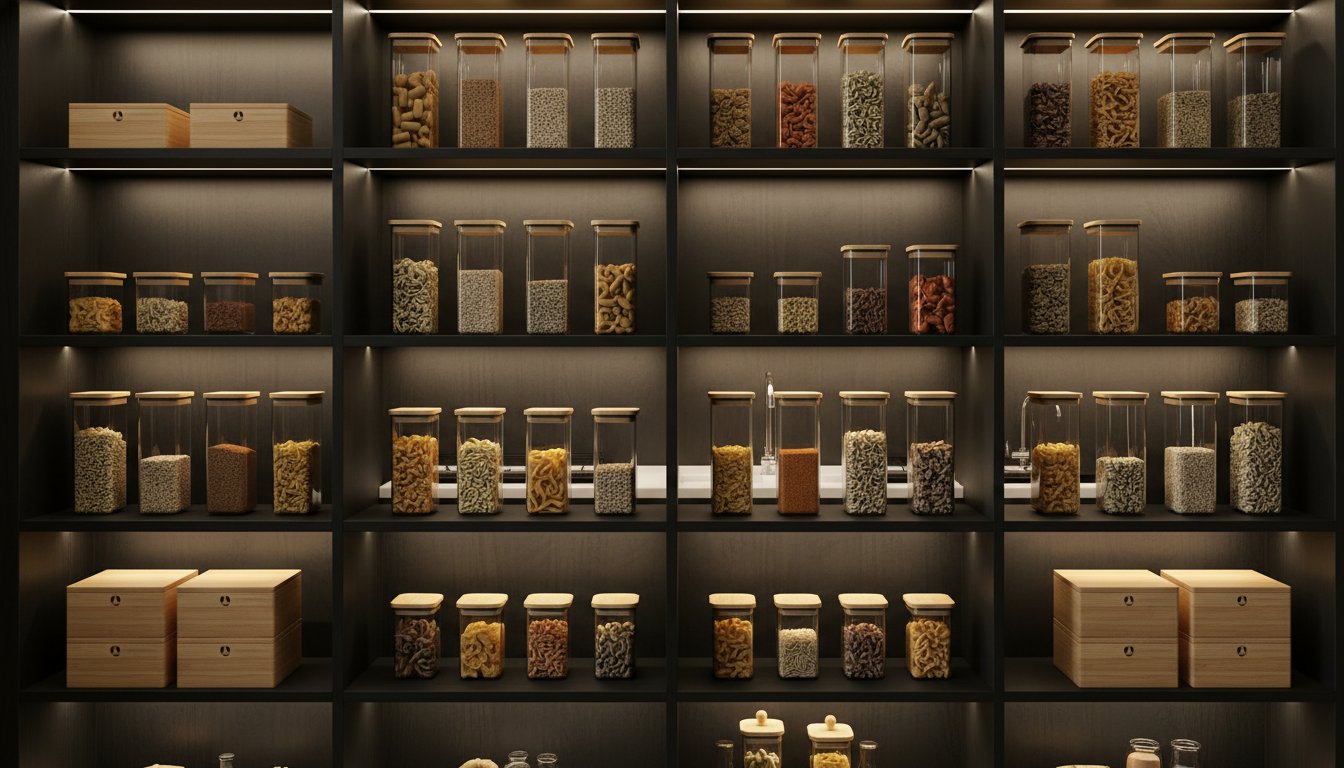
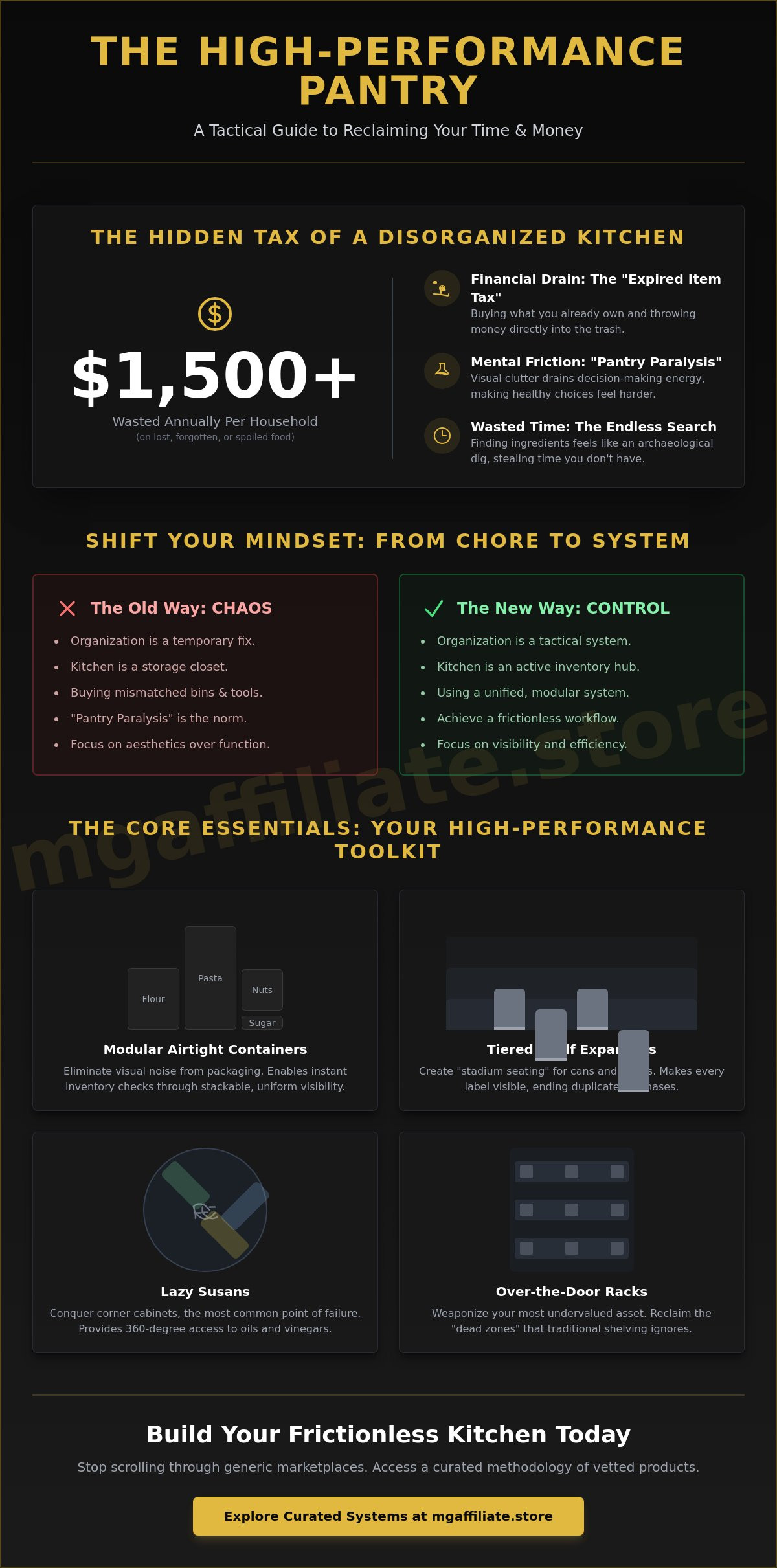
The average American household wastes over $1,500 per year on food that is lost, forgotten, or spoiled. That isn't just a mess. It's a tactical failure in your home's infrastructure that stems from a lack of high-performance pantry organization finds. You're likely exhausted by the mental fatigue of digging through a cluttered cabinet for ingredients you've already bought three times. It's draining. It's inefficient. Most importantly, it's completely avoidable. You don't need more space. You need a better system.
I'm giving you the blueprint to reclaim your kitchen's workflow immediately. This guide provides the strategic tools you need to stop losing time and money. We'll examine the specific airtight containers and modular bamboo systems that turn a chaotic pantry into a visible, high-value asset. This is your roadmap to a strategic setup designed for a truly frictionless cooking experience and a significantly lower grocery bill.
Key Takeaways
- Stop viewing organization as a chore and start treating it as a high-performance tactical system for your daily life.
- Identify the essential pantry organization finds that utilize vertical space and visual uniformity to stop your inventory from disappearing.
- Build a frictionless workflow by zoning your kitchen based on how often you actually touch an item rather than just its category.
- Learn why precision measurement and a "brutal audit" are the only ways to avoid wasting money on systems that don't fit your space.
- Access a curated methodology of vetted products that eliminates the need for endless, unproductive scrolling through generic marketplaces.
Stop Wasting Time: Why Your Messy Pantry is a Tactical Failure
Your messy pantry isn't a personality trait. It’s a tactical failure. Most people treat organization as a weekend craft project or a "neat freak" obsession. They're wrong. High-performance living requires high-performance infrastructure. If your kitchen is a black hole of half-used pasta boxes and expired spices, you're bleeding resources. True pantry organization finds aren't about pretty labels. They're about systemizing your output. You don't need a lifestyle makeover. You need a better logistics strategy.
Traditional tidying is a temporary fix. It’s a cosmetic bandage on a structural wound. When you look at the history of the pantry, you see it was always intended to be a functional hub of household efficiency. In 2026, the standard is clear. We demand visibility, accessibility, and scalability. If you can’t see your inventory in three seconds, your system has failed. You're likely suffering from "pantry paralysis." It’s that mental drain where you give up on a healthy meal because finding the ingredients feels like an archaeological dig. You're losing time you don't have.
The Financial Drain of a Disorganized Kitchen
Clutter is a hidden tax you pay every single month. When your shelves are a chaotic mess, you buy what you already own. You lose track of expiration dates. You throw money directly into the trash. This is the "expired item tax." It’s a drain on your wealth that most people ignore because they're too busy digging for the salt. Stop treating your kitchen like a storage closet for forgotten goods. It is an active inventory system. Every square inch must justify its existence. By implementing the right pantry organization finds, you reclaim that lost revenue. You stop the cycle of duplicate spending. You start running your home with the precision of a professional operation.
Mental Friction and Meal Prep Fatigue
Visual clutter isn't just an aesthetic problem. It’s a psychological one. Every misplaced jar and buried can creates mental friction. This friction accumulates throughout the day. By the time dinner rolls around, your decision-making energy is depleted. Healthy cooking begins to feel like an impossible chore. You aren't lacking discipline; your environment is simply working against you. A frictionless kitchen eliminates search time. It supports your high-performance goals by making the right choice the easiest choice. When your setup is optimized, meal prep stops being a battle of wills. It becomes a streamlined execution of your daily strategy. You deserve a workspace that matches your ambition.
The Core Essentials: High-Performance Pantry Organization Finds
Success in the kitchen isn't about how much space you have. It’s about how you weaponize it. You don't need a massive walk-in closet to achieve a frictionless workflow. You need the right pantry organization finds. Most homeowners fail because they buy mismatched bins that don't talk to each other. That’s an amateur move. A high-performance pantry relies on a unified system where every component serves a specific tactical purpose. If your tools don't integrate, your system will eventually collapse into chaos.
Stop guessing what’s in the back of your cabinets. If you can't see it, you don't own it. It’s that simple. By implementing tiered shelf expanders and over-the-door racks, you reclaim the "dead zones" that traditional shelving ignores. These aren't just accessories. They are the infrastructure of a professional-grade kitchen. You can find these elite-level tools in our curated shopping collections.
The Power of Uniformity: Why Modular Sets Win
Stackability is a requirement. It is not a luxury. When you use modular airtight containers, you eliminate the visual noise of mismatched packaging. This uniformity allows for instant inventory checks. You see exactly when your supplies are low before you hit a crisis point. Adhering to safe food storage guidelines becomes effortless when your containers are designed for visibility and freshness. Modularity is the strategic ability to reconfigure your storage infrastructure as your consumption patterns evolve without replacing the entire system. Don't settle for plastic clutter. Choose clear, high-impact materials that allow you to manage your inventory at a glance.
Reclaiming Vertical and Corner Space
Vertical space is your most undervalued asset. Most pantries have six to ten inches of wasted air above every shelf. Tiered shelf expanders create "stadium seating" for your canned goods and spices. This ensures every label is visible. No more buried cans. No more duplicate purchases. Corner cabinets are another common point of failure. The 360-degree rotation of a Lazy Susan is a non-negotiable for oils, vinegars, and high-frequency items. It turns a dark, unreachable corner into a high-access zone. You must identify every dead zone in your current layout and weaponize it. If a square inch isn't working for you, it's working against you. Reclaiming this real estate is how you scale your efficiency without expanding your footprint. It’s about maximizing the pantry organization finds you already have by placing them with tactical intent.
Beyond Aesthetics: Building a Frictionless Kitchen Workflow
Aesthetics are a byproduct of a functional system, not the goal. If you're buying pantry organization finds just to make your shelves look like a magazine cover, you're missing the point. You need a workflow. Friction is the enemy of consistency. Every second you spend searching for a specific spice or moving a heavy flour bag is a micro-failure in your kitchen’s infrastructure. To build a truly high-performance environment, you must prioritize ergonomics over appearance. Don't just clean. Systemize.
Start with the heavy lifting. Large bulk items and high-weight goods belong on the bottom. Lifting a 20-pound bag of rice from a top shelf is a safety hazard and a physical drain. Middle shelves are your prime real estate. This is where your most frequent "touches" happen. By integrating viral amazon kitchen tools 2026 into this layout, you ensure that even your most modern gadgets support a logical, physical flow. Don't fight gravity. Use it.
The Zoning Methodology
The "Eye-Level Rule" is your primary directive. Items used daily must be front and center. If you have to reach for a stool every morning for coffee filters, your system is broken. Consider these specific zones for maximum efficiency:
- Daily Essentials: Coffee, oils, and breakfast items at eye level.
- Heavy Infrastructure: Bulk grains and appliances on lower shelves.
- Kid-Autonomy Zone: Healthy snacks placed within reach of children.
- Seasonal Storage: Holiday platters and rare ingredients on the highest tiers.
Creating a "Kid-Friendly" zone fosters independence and reduces your daily workload. They get their own snacks; you get your time back. Finally, separate your back-stock from your active-stock. Your main pantry should only hold what you're currently using. Everything else is deep storage. This prevents the "overcrowding" that leads to inventory blindness and duplicate spending.
The Tactical Labeling Protocol
Transparency is the only cure for confusion. Labels aren't for the items you recognize. They're for the people who don't. Whether you choose minimalist vinyl, chalkboard, or digital tags, the goal is clarity. Here is a pro-tip: label the shelf, not just the container. When a jar is empty and in the dishwasher, the label on the shelf tells everyone exactly where it belongs. This prevents the "empty jar mystery" where items migrate to the wrong zones. Treat expiration date tracking as a high-performance habit. Knowing exactly when a product loses its value allows you to rotate stock effectively and eliminate waste before it happens. This is how you maintain the pantry organization finds you've invested in for the long term.
Tactical Implementation: How to Organize Without the Fluff
Stop looking for "pretty" and start looking for "functional." Most people treat organization like a craft project. That is why they fail. You don't need a decorative overhaul; you need a logistical reset. The first step is the "Empty and Audit" phase. Take everything out. Every single item. If you haven't touched it in six months, it's dead weight. Be brutal. Remember, the average household wastes over $1,500 per year on food that is lost or forgotten. You are literally throwing money away. By implementing the right pantry organization finds, you stop the leak.
Professional kitchens run on the FIFO method: First In, First Out. It is a non-negotiable standard for high-performance environments. When you restock, move the older inventory to the front and place the new items in the back. This simple rotation ensures nothing expires in the shadows. It’s about maintaining a visible, active inventory. If you're ready to stop the cycle of waste, you can find the tools to execute this strategy in our curated shopping collections.
The Measurement and Planning Phase
Eyeballing your shelf space is a recipe for wasted capital. You will end up with bins that are too deep for your cabinets or containers that are too tall for your cereal. Measure your depth, height, and width with precision. Don't just measure the shelf; measure the clearance between shelves. You must also allow for "breathing room." A packed pantry is a pantry where items get lost. Planning your layout saves significantly more time than the actual cleaning process. If you don't have a blueprint, you don't have a system.
The 5-Minute Weekly Reset
Relapse is the enemy of efficiency. Even the best systems will degrade if you don't maintain them. Implementing a five-minute weekly reset prevents your pantry from sliding back into chaos. Do this right before your weekly grocery run. Audit your "active" zones to see what you actually need. Re-align your labels and make sure every container is in its designated home. This habit ensures your kitchen remains a high-performance workspace. It integrates perfectly with our guide on the best products for organization. Consistency is the only way to protect your investment and maintain a frictionless daily routine.
Curated Efficiency: The MG Affiliate Store System
Decision fatigue is the silent killer of productivity. You've likely spent hours scrolling through generic marketplaces, overwhelmed by thousands of identical-looking plastic bins. This is a waste of your most valuable resource: time. Most platforms profit from your confusion. They want you to keep clicking. We don't. Our system is built on the belief that you deserve a high-performance home without the research tax. We’ve done the heavy lifting so you can focus on execution. By utilizing our curated shopping collections, you bypass the noise and move straight to the solution.
Generic lists don't account for your specific workflow. They just want to sell you more stuff. Our pantry organization finds are selected based on a strict tactical logic. We don't care about what's "trending" on social media if it doesn't solve a real-world problem. If a product doesn't improve your visibility or accessibility, it doesn't make the cut. It’s that simple. You aren't just buying containers; you're investing in a proprietary methodology for a frictionless life. We vet the performance so you don't have to.
The Vetting Process
Our filters are brutal. We prioritize three key metrics: durability, stackability, and real-world utility. If a container cracks under pressure or wastes an inch of vertical space, we reject it. Many "aesthetic-only" trends fail the moment a busy household actually starts using them. We ignore the sponsored hype. Our community trusts our straight-talk reviews because we value performance over appearance. We vet the infrastructure so your kitchen can actually handle the demands of your daily routine. No fluff. Just tools that work. This is why our pantry organization finds consistently outperform generic alternatives.
Start Your Transformation Today
Don't try to fix everything at once. That's a recipe for burnout. Choose your first "Tactical Win." Start with the spice rack or your primary dry goods zone. These are high-impact areas where a small change creates immediate momentum. Once you see the time you reclaim, you'll be ready to scale the system. Access our full 2026 Pantry Collection to find the exact tools that match your layout. Stop settling for a mediocre kitchen environment that drains your energy and your bank account. Reclaim your space. Reclaim your time. The system is ready. Are you?
Reclaim Your Kitchen Infrastructure Today
You've seen the data. A messy pantry isn't just an eyesore; it's a financial and mental leak that drains your resources every single day. You now have the blueprint to stop that drain. By shifting to a high-performance mindset and utilizing strategic pantry organization finds, you've already outpaced the average household. You've learned that visibility is the foundation of inventory control and that modularity is the key to a truly scalable system. No more excuses. No more wasted capital.
Don't let this knowledge sit idle. Information without execution is just noise. We've vetted the market for 2026 durability so you don't have to waste another minute on generic, low-value products. Our zero-fluff, performance-first curation is trusted by thousands of high-efficiency households who refuse to settle for mediocrity. It’s time to stop fighting your environment and start winning in it. You have the tools. You have the strategy. Now, you need to act.
Build Your High-Performance Pantry with Our Curated Finds. Your frictionless kitchen is just one tactical decision away. Take it. You've got this.
Frequently Asked Questions
What are the best pantry organization finds for small kitchens?
Over-the-door racks and stackable modular bins are the elite choice for tight footprints. These pantry organization finds weaponize the vertical space that most people ignore. If you don't have floor space, you must use your doors. It’s about maximizing every square inch of your kitchen's infrastructure to prevent a total logistical collapse. Stop complaining about a small kitchen and start optimizing the air space you already own.
How do I start organizing my pantry when I'm overwhelmed?
You start by identifying a single "Tactical Win" zone, such as your spice rack or breakfast shelf. Don't attempt to overhaul the entire pantry in one weekend. That leads to burnout and half-finished projects. Clear out one small area, audit the inventory, and implement a system that works. Success breeds momentum. Once you master one zone, the rest of the pantry will follow.
Are expensive glass jars worth it for pantry organization?
Glass jars are only worth the investment if they provide a superior airtight seal that preserves your inventory. Performance is the only metric that matters. While glass offers high visibility, clear BPA-free plastic is often more durable in high-traffic households. Don't buy for the aesthetic alone. If the jar doesn't keep your food fresh or stack properly, it's a tactical failure.
How do I keep my pantry organized with kids in the house?
You maintain order by creating a designated "Kid-Autonomy Zone" at their eye level. Fill this area with healthy, pre-approved snacks in open-top bins they can reach without your help. This reduces your daily workload and teaches them to respect the system. If they know exactly where their items belong, they're less likely to tear through your organized shelves looking for a snack.
What is the most forgotten space in a pantry that I should be using?
The back of your pantry door and the "dead air" above your shelves are the most neglected assets in your home. Most people leave six to ten inches of empty space between the top of their cans and the shelf above. Use tiered shelf expanders and over-the-door racks to reclaim this real estate. If you aren't using your door for storage, you're leaving valuable efficiency on the table.
How often should I audit my pantry inventory?
You should perform a five-minute tactical reset every single week before you go grocery shopping. This prevents clutter from accumulating and ensures your shopping list is accurate. A deep audit of expiration dates and structural integrity should happen quarterly. Regular maintenance is the only way to protect your investment and keep your kitchen running like a professional operation.
Do I need to label everything in my pantry for it to work?
Labeling is essential, but you should label the shelf itself rather than just the container. When a jar is in the dishwasher, the shelf label tells everyone exactly where it needs to return. This prevents the "empty jar mystery" and keeps your pantry organization finds in their correct zones. Transparency is the only way to eliminate the confusion that leads to a messy pantry.
Can I organize my pantry on a strict budget?
You can absolutely organize on a budget by prioritizing high-impact tools over a total aesthetic overhaul. Invest your limited capital in tiered shelf expanders and a few airtight containers for your most expensive bulk goods. You don't need a matching set of everything to have a functional system. Focus on the tools that provide the biggest return on efficiency first.